NASA Systems Engineering Handbook (SP-2016-6105 Rev2): four terminology observations
A reader's note, September 2026. Each observation shows a term that the handbook uses in two different senses, with the handbook's own pages.
This is an independent reader's note and is not affiliated with NASA. Page images are taken from the public PDF edition of NASA/SP-2016-6105 Rev2; page numbers are the printed page numbers. Highlights are added in the quotes only; the page images are unchanged.
1Waiver: an agreement, or an authorization?
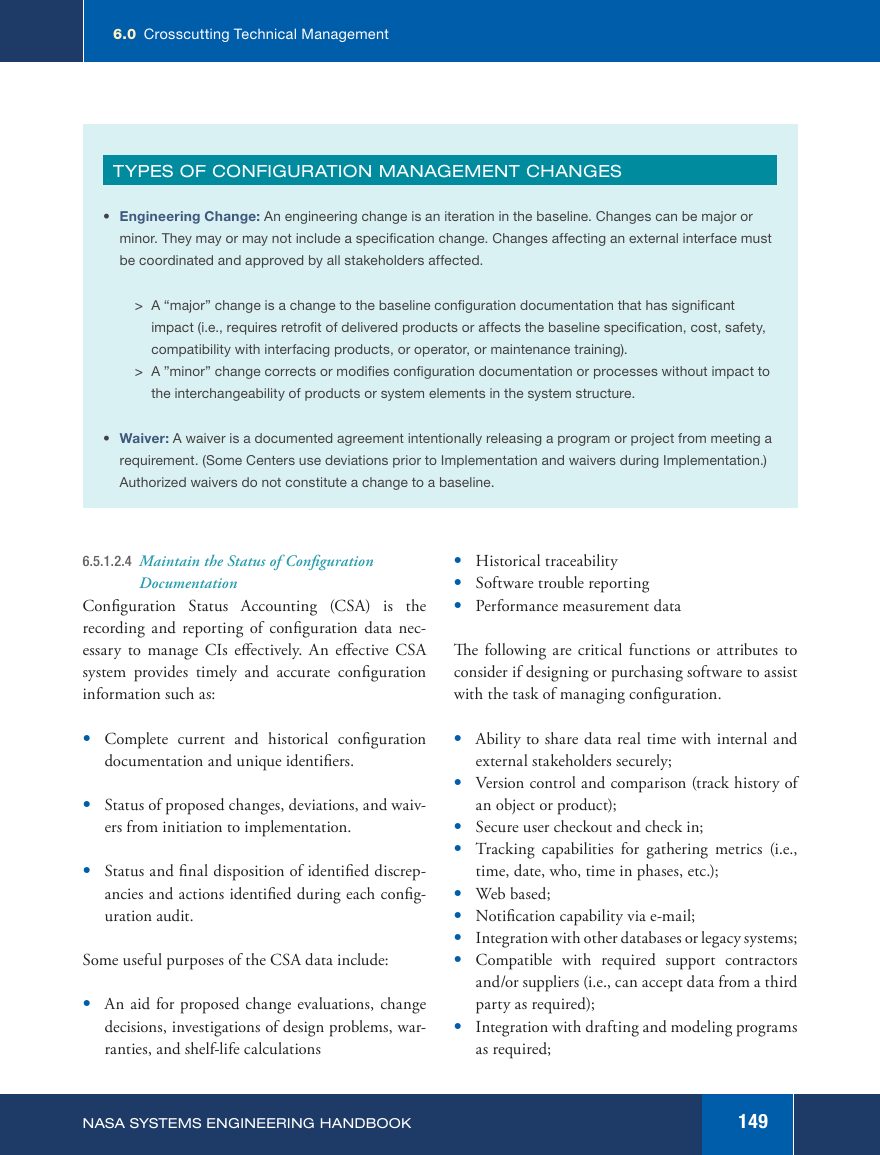
“A waiver is a documented agreement intentionally releasing a program or project from meeting a requirement.”§6.5, box “Types of Configuration Management Changes”, p. 149
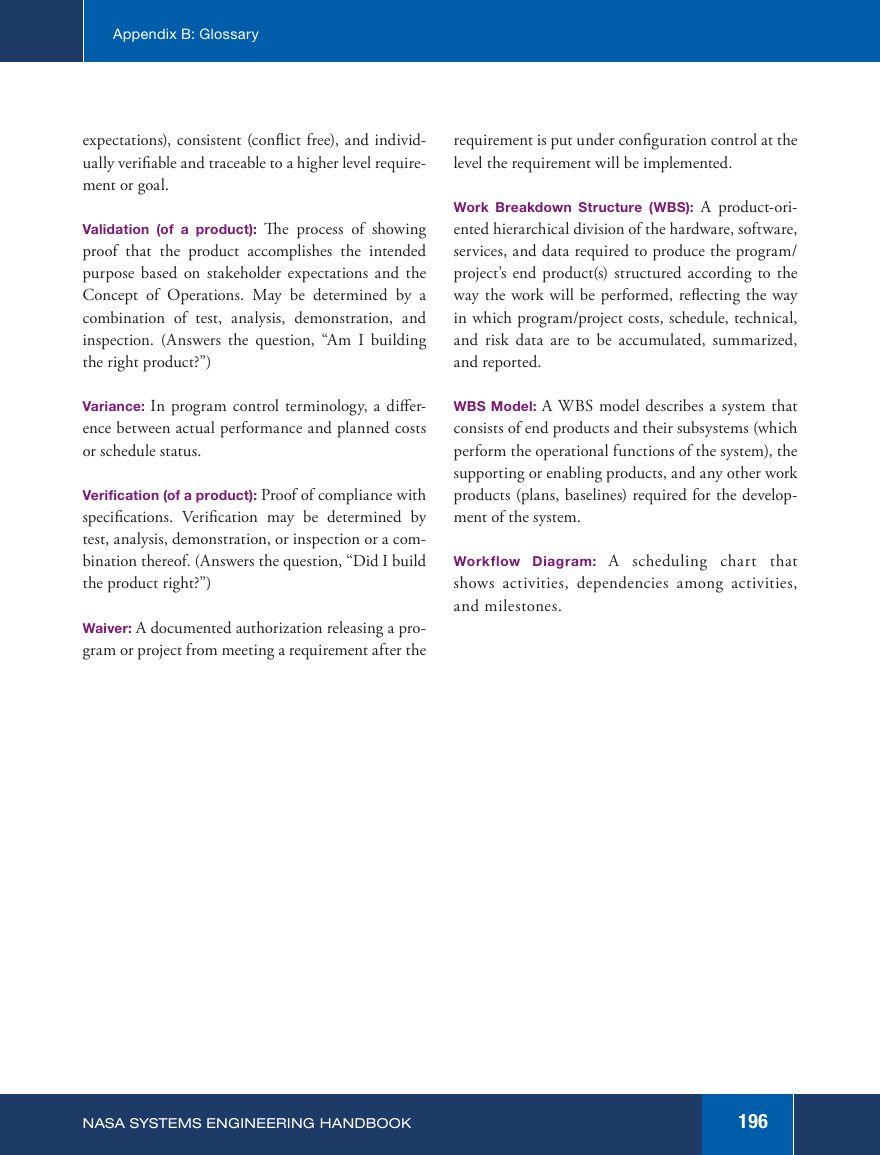
“Waiver: A documented authorization releasing a program or project from meeting a requirement after the requirement is put under configuration control at the level the requirement will be implemented.”Appendix B, Glossary, p. 196
An agreement and an authorization are different acts, and the glossary adds a timing condition that §6.5 does not state.
2Product Realization: an activity, or its result?
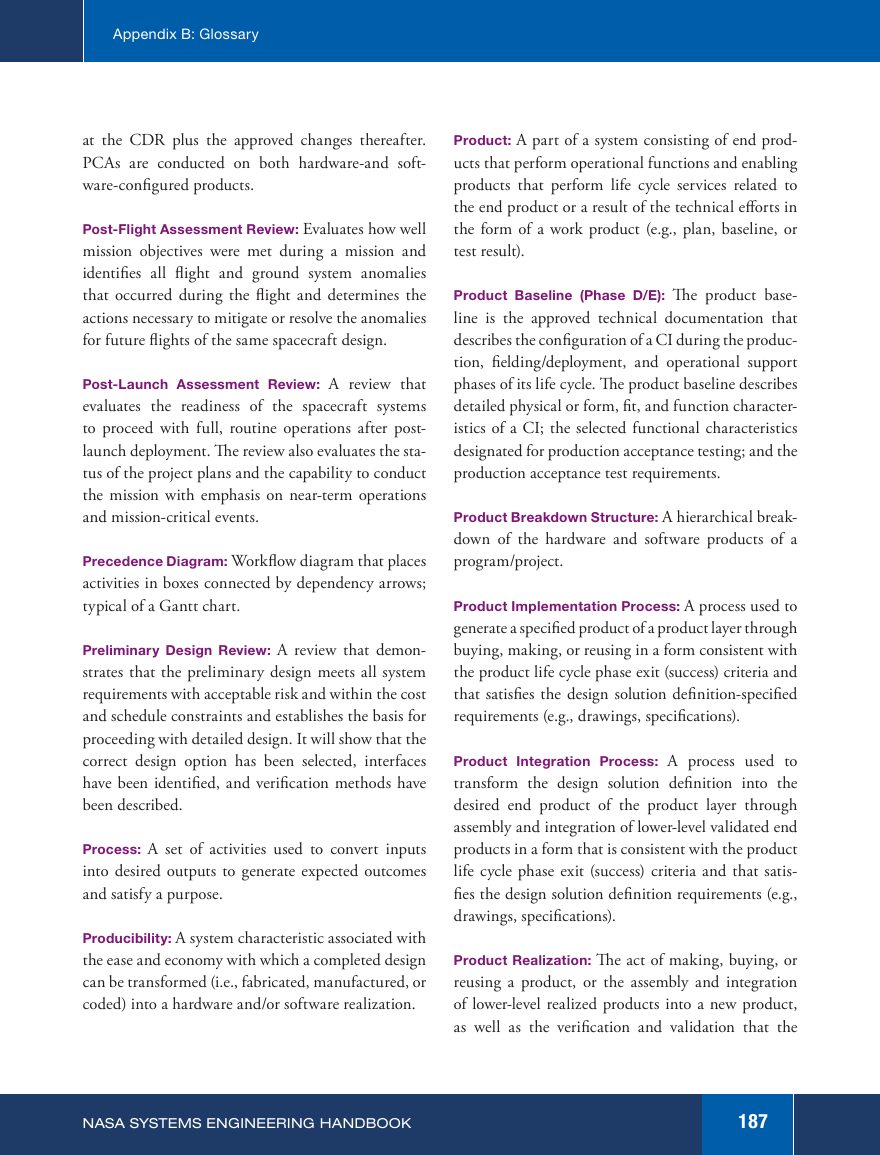
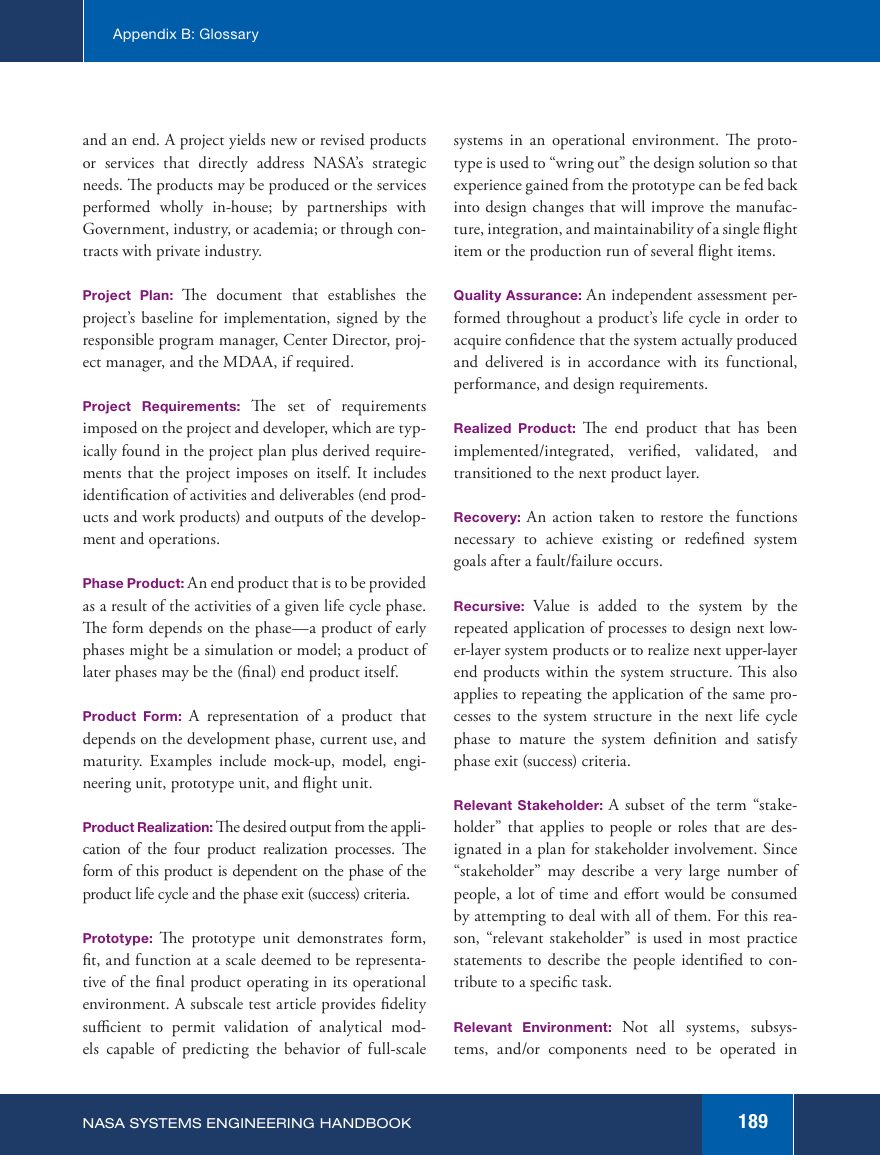
“Product Realization: The act of making, buying, or reusing a product, or the assembly and integration of lower-level realized products into a new product, as well as the verification and validation …”Appendix B, Glossary, p. 187
“Product Realization: The desired output from the application of the four product realization processes.”Appendix B, Glossary, p. 189
The glossary defines the term twice: once as an activity, once as the result of that activity.
3TA: Technical Authority, or Technology Assessment?
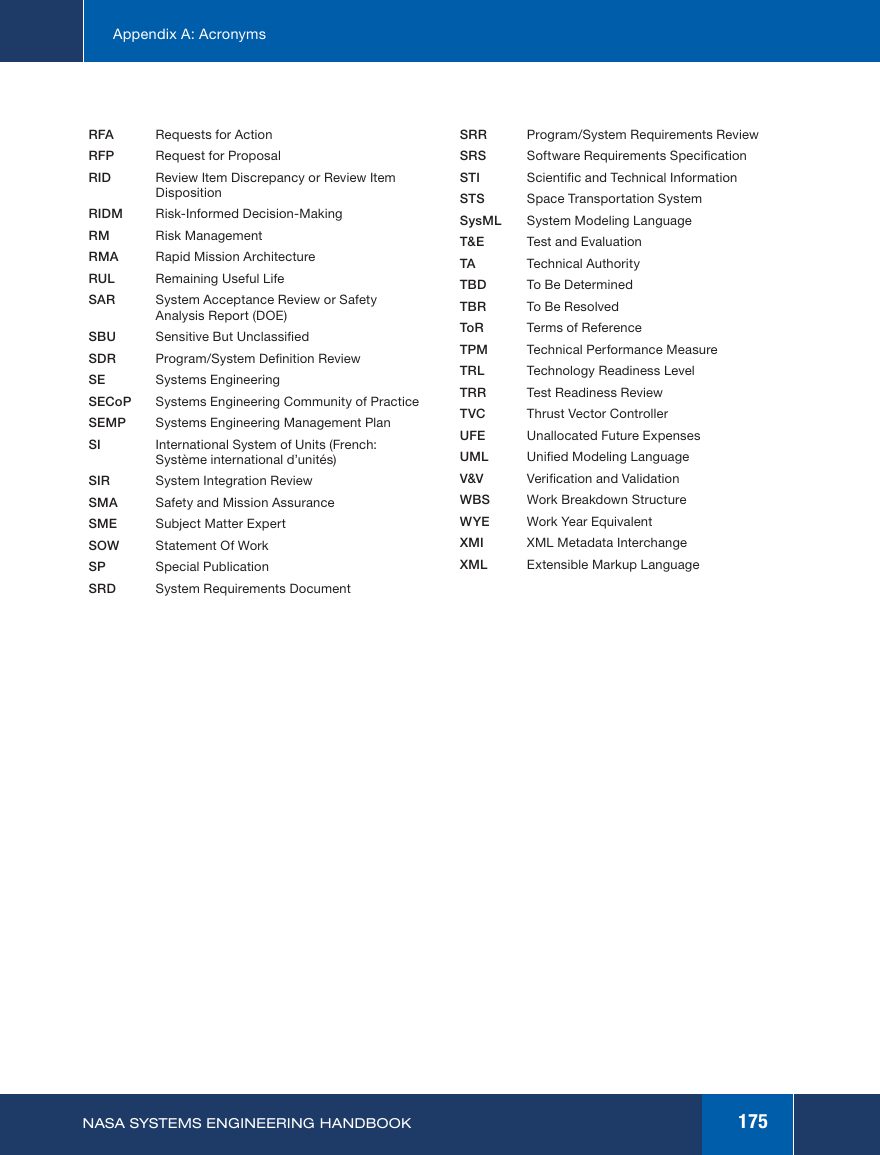
“TA — Technical Authority”Appendix A, Acronyms, p. 175
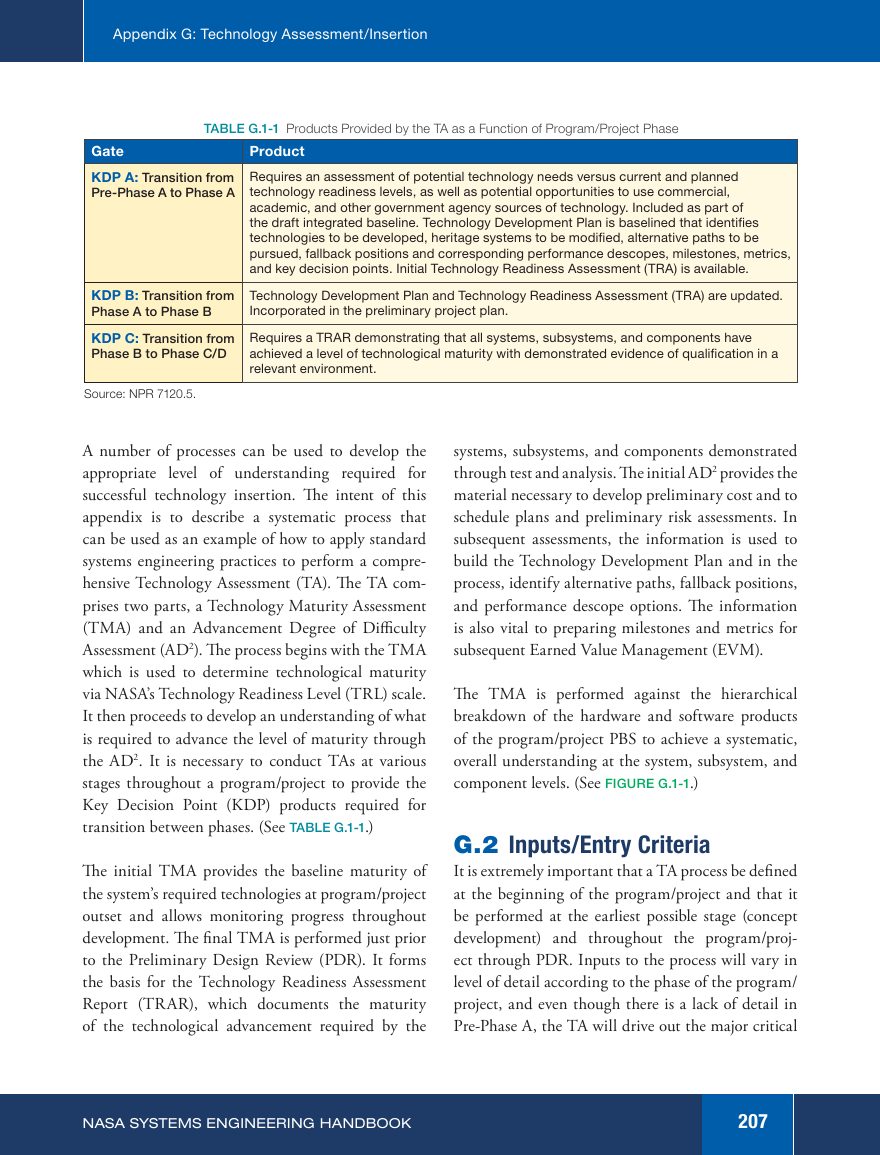
“… to perform a comprehensive Technology Assessment (TA). The TA comprises two parts …”Appendix G, p. 207 (also Table G.1-1)
The acronym list expands TA one way; Appendix G uses it for something else.
4Trade studies: measures of performance, or of effectiveness?
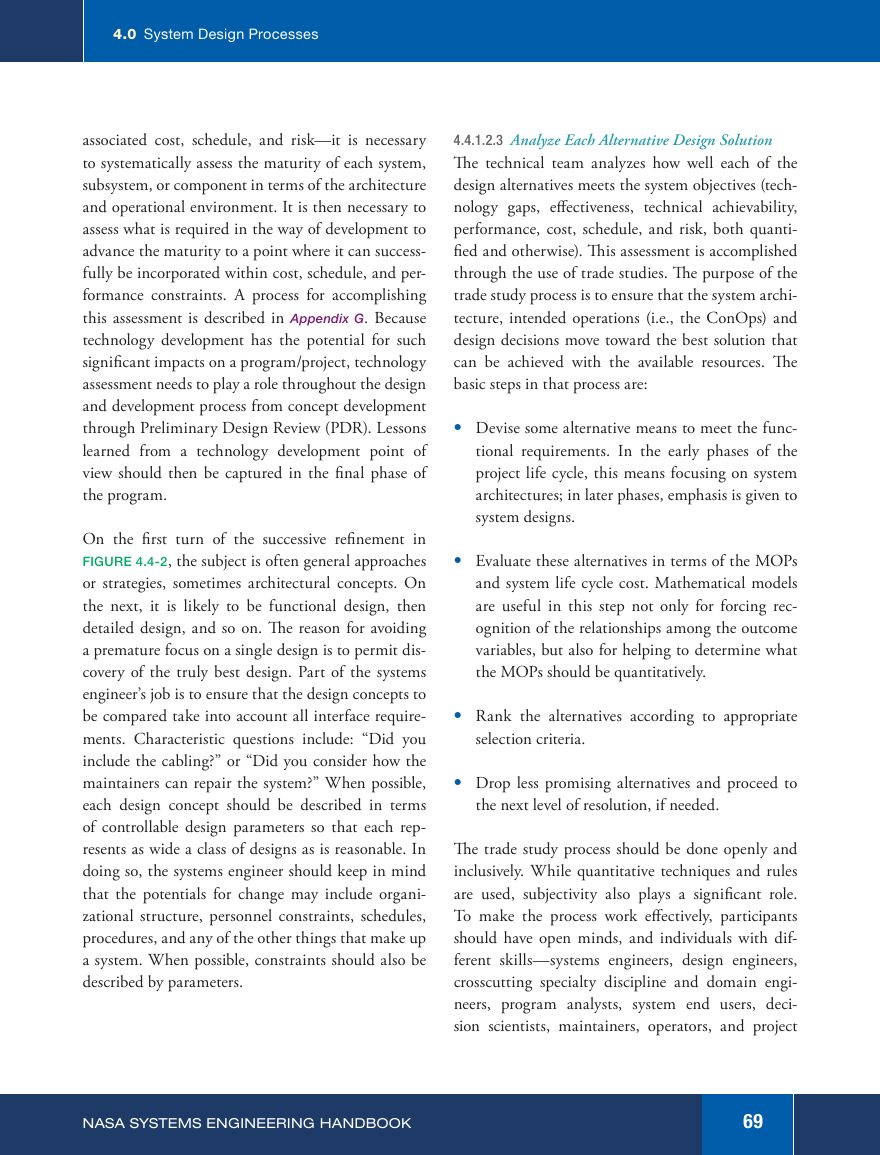
“Evaluate these alternatives in terms of the MOPs and system life cycle cost.”§4.4.1.2.3, p. 69
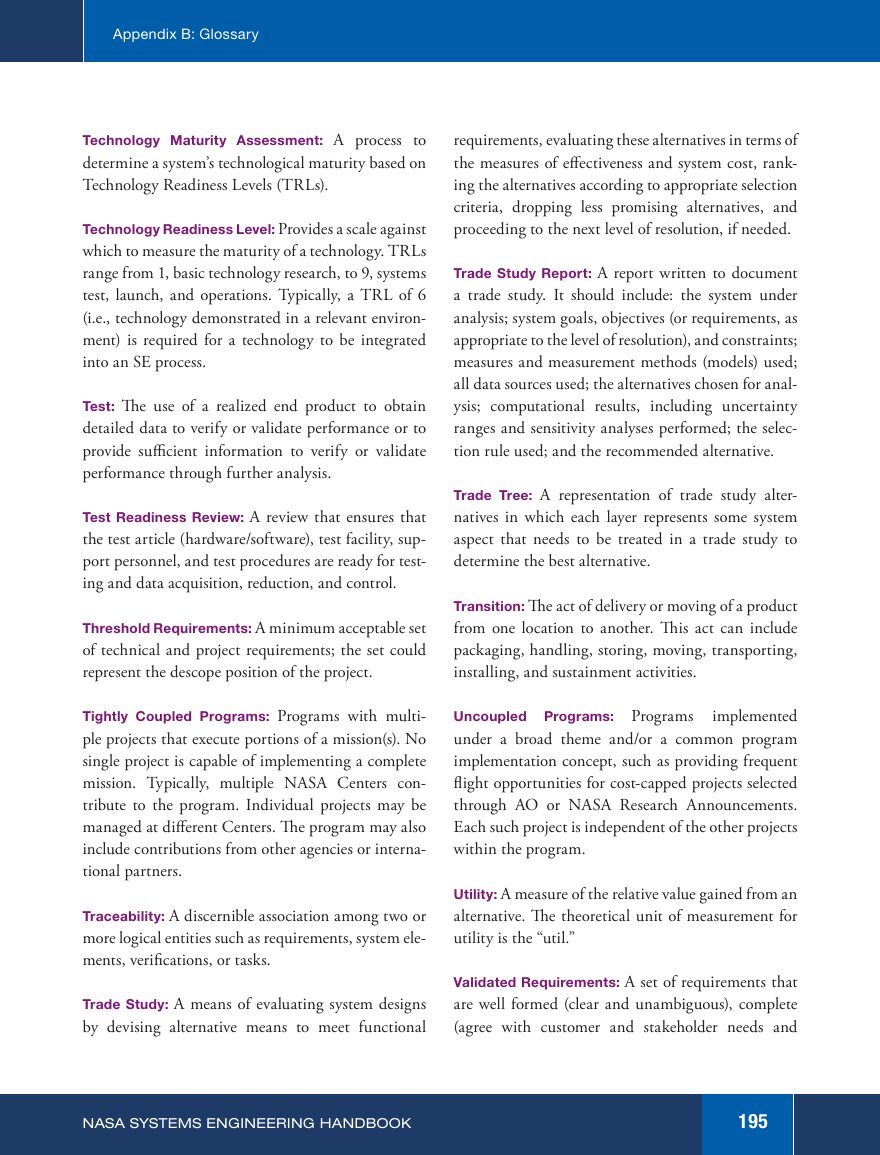
“Trade Study: A means of evaluating system designs by devising alternative means to meet functional requirements, evaluating these alternatives in terms of the measures of effectiveness and system cost …”Appendix B, Glossary, p. 195
The process text evaluates alternatives on measures of performance; the glossary on measures of effectiveness.